
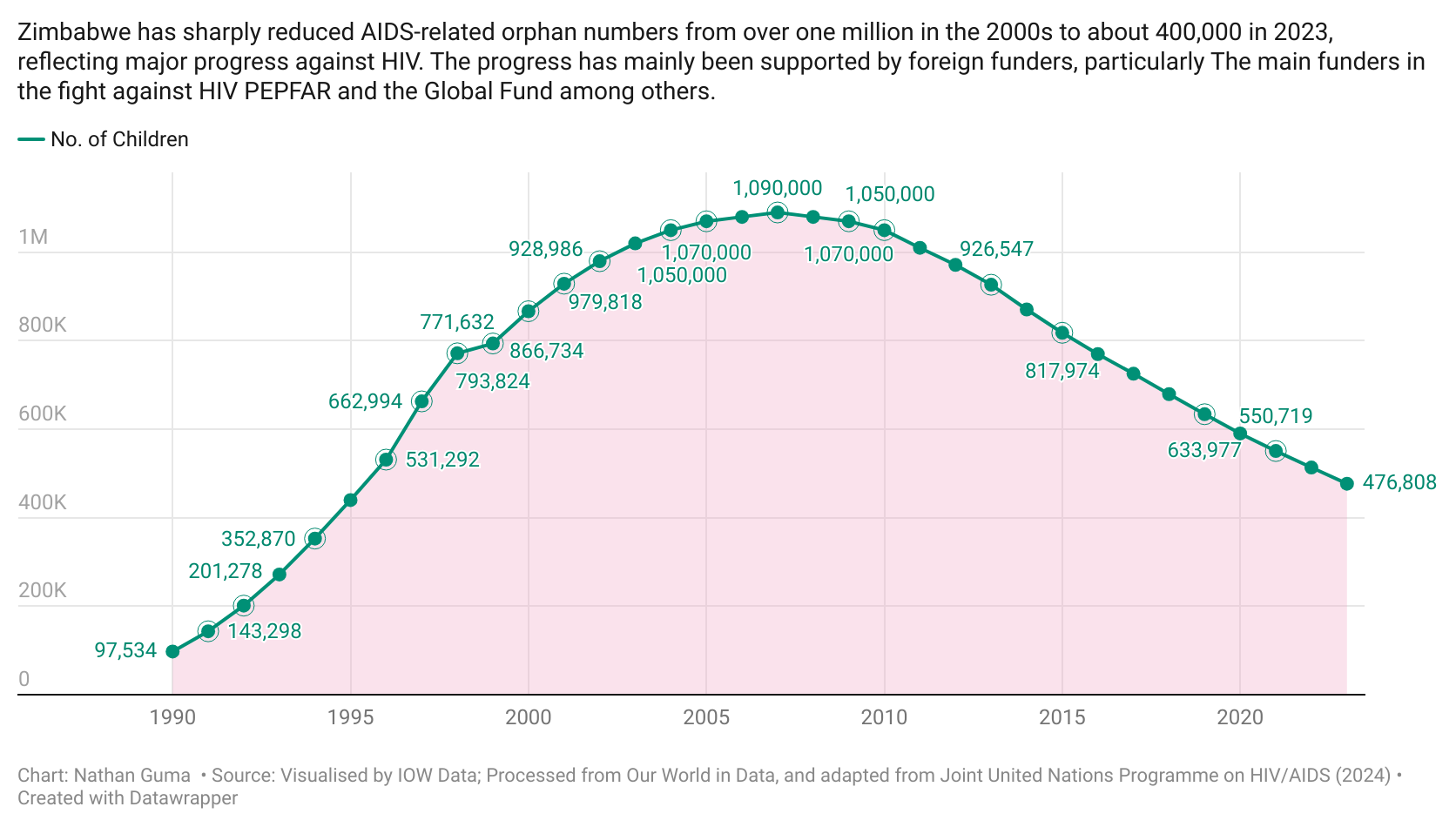
THE number of children orphaned by AIDS-related deaths in Zimbabwe has fallen dramatically over the past three decades, reflecting major progress in the fight against HIV, new data has shown.
Data from Our World in Data, adapted from the Joint United Nations Programme on HIV/AIDS for 2024, shows that the number of orphans, aged 17 and below, rose sharply during the 1990s before peaking at more than one million in the mid-2000s.
The surge mirrored the height of the HIV epidemic, when limited access to antiretroviral therapy (ART) and widespread infections led to high mortality rates among parents.
During this period, thousands of children were left without one or both parents, placing immense strain on families, communities, and social welfare systems.
From 2010 onwards, the trend began to reverse, driven by improved access to ART, stronger health programmes, and greater awareness campaigns.
By 2023, the number of AIDS orphans had dropped to about 400,000 – less than half the peak recorded nearly two decades earlier.
The decline signals the impact of national and international interventions aimed at reducing HIV transmission and improving treatment coverage.
Expanded testing, prevention of mother-to-child transmission, and community-based care initiatives have contributed significantly to reducing AIDS-related deaths.
Despite the progress, the figures highlight the lasting social and economic consequences of the epidemic.
Hundreds of thousands of children continue to live without parental support, underscoring the need for continued investment in social protection, education, and healthcare systems to safeguard gains achieved in the fight against HIV/AIDS. – IOW Data.

