ZIMBABWE’S life expectancy trends show a sharp decline in the 1990s, followed by a sustained recovery after 2000, with women consistently living longer than men throughout.
According to data by the United Nations in its World Population Prospects for 2024, there have been fluctuations in the national life expectancy, standing at 61.57 years for women and 55.16 years for men in 1990.
By 2000, it had fallen to 47.3 years for women and 44.83 for men, the lowest levels recorded across both visuals.
The steepest declines occurred between 1992 and 1996, with men dropping below 47 years by 1996, while women fell to nearly 51 years the same year.
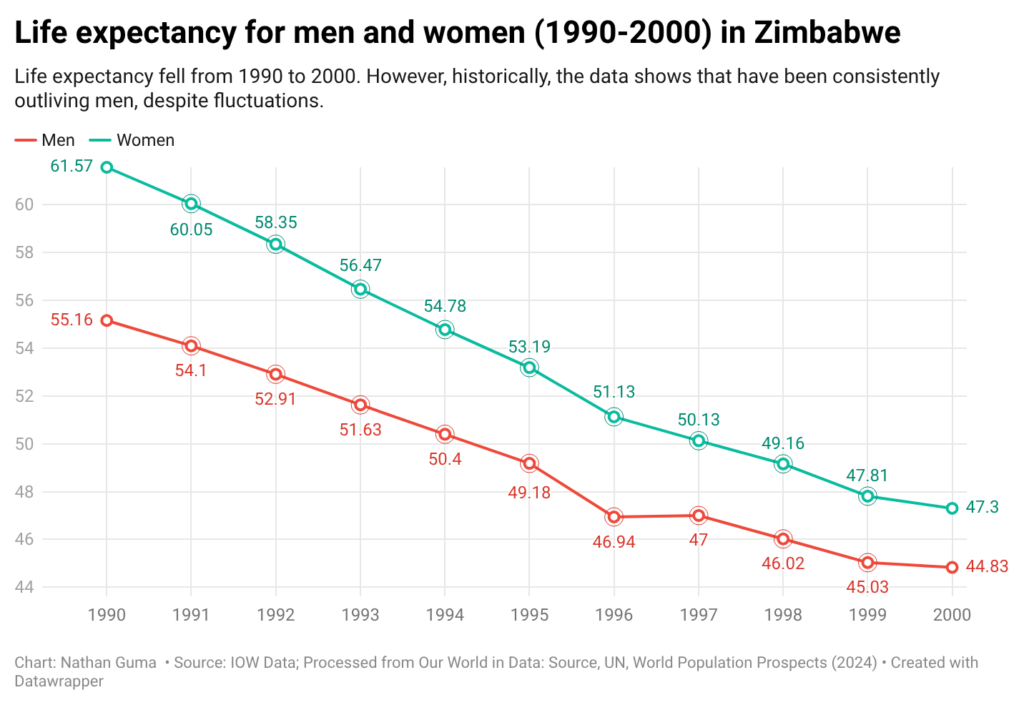
The downward trend continued, though more gradually, until 2000.
However, from 2000 onwards, the trajectory reversed, with life expectancy rising steadily for both sexes, with minor fluctuations.
Gains accelerated after 2009, and by 2014, women had surpassed 59 years and men 56 years.
A brief dip is visible around 2021, when women fell to about 62.29 years and men to 57.72 years.
The highest levels across the two periods appear in 2023, at 65.01 years for women and 60.23 for men, with overall, the data showing a 2000 low point, and a prolonged recovery that lifted life expectancy to its peak by 2023.
What made the life expectancy fall?
Based on the sources provided, Zimbabwe’s life expectancy trends are influenced by a combination of global shocks, regional health improvements, and specific demographic challenges.
Covid-19 Pandemic
While the report does not isolate Zimbabwe’s specific year-by-year pandemic data, it says that global life expectancy at birth fell to 70.9 years during 2020 and 2021, down from 72.6 in 2019.
This rise in mortality halted or reversed progress in nearly all countries and areas, Zimbabwe included, and the rest of Sub-Saharan Africa.
Since 2022, life expectancy has generally returned to pre-pandemic levels.
Reductions in Child Mortality
A significant driver of the long-term increase in Zimbabwe’s life expectancy has been the successful reduction of preventable deaths among young children.
Data shows that Zimbabwe’s under-5 mortality rate has dropped significantly from roughly 100 deaths per 1,000 live births in 1995 to approximately 50 in 2024.
Improvements in Public Health and Medicine
Zimbabwe’s overall upward trend, moving from a life expectancy of roughly 58 years in 1995 to approximately 66 years in 2024, has largely been attributed to improved medication.
This is also coupled with improved public health and personal hygiene, improved nutrition and medicine and critical low-cost treatments, such as vaccinations, nutritional supplements, and better antenatal and postnatal care.
Some have been subsidised and also provided free of charge by international donors such as the United States Government over the past years.
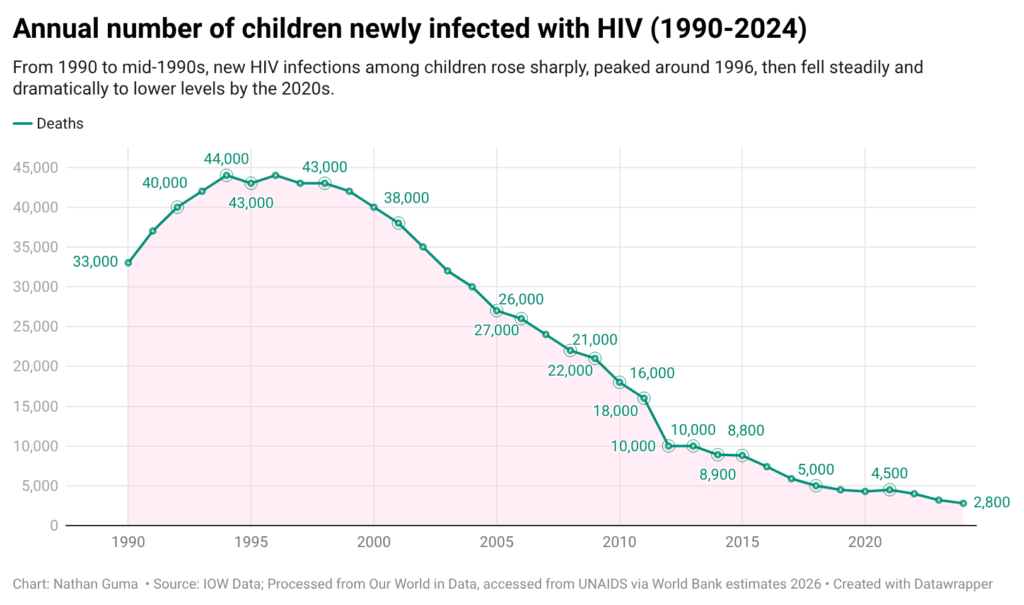
Improvement in medication has also seen a massive drop in HIV related deaths among children of people with HIV in the same period.
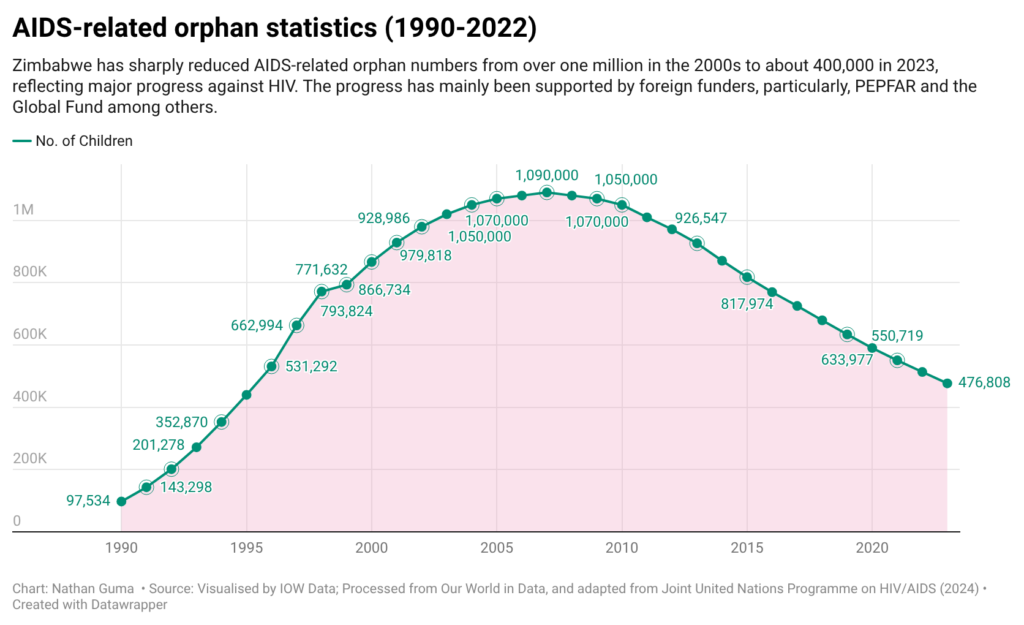
The Role of HIV and AIDS
The sources indicate that specialised demographic models are required to estimate mortality for countries like Zimbabwe that have been significantly affected by HIV and AIDS.
This suggests that the epidemic has been a primary factor in historical fluctuations and in the region’s unique mortality patterns.
Future Projections
Life expectancy in Zimbabwe is projected to continue rising, potentially reaching the mid-70s by 2054.
However, according to the report, Sub-Saharan Africa as a whole is still expected to lag behind global averages by several years through the end of the century. – IOW Data.