THE Zimbabwean government’s decision to enact the Private Voluntary Organisations (PVO) Amendment Act could jeopardise the country’s debt-servicing efforts.
The law, which regulates NGOs has been facing criticism for restricting civic space.
Its impact is already being felt, with the European Union discontinuing governance funding—the second such move since Zimbabwe’s disputed 2023 elections.
“Zimbabwe has over US$21 billion in debt and arrears. It is disappointing to see the government fail to uphold commitments, particularly on civic space,” said EU Ambassador Jobst von Kirchmann.
“The PVO Act’s enactment, without addressing civil society’s concerns, reinforces negative governance trends. As a result, the EU will discontinue planned 2025 funding for good governance initiatives.”
The Act amendment could have economic implications on debt restructuring.
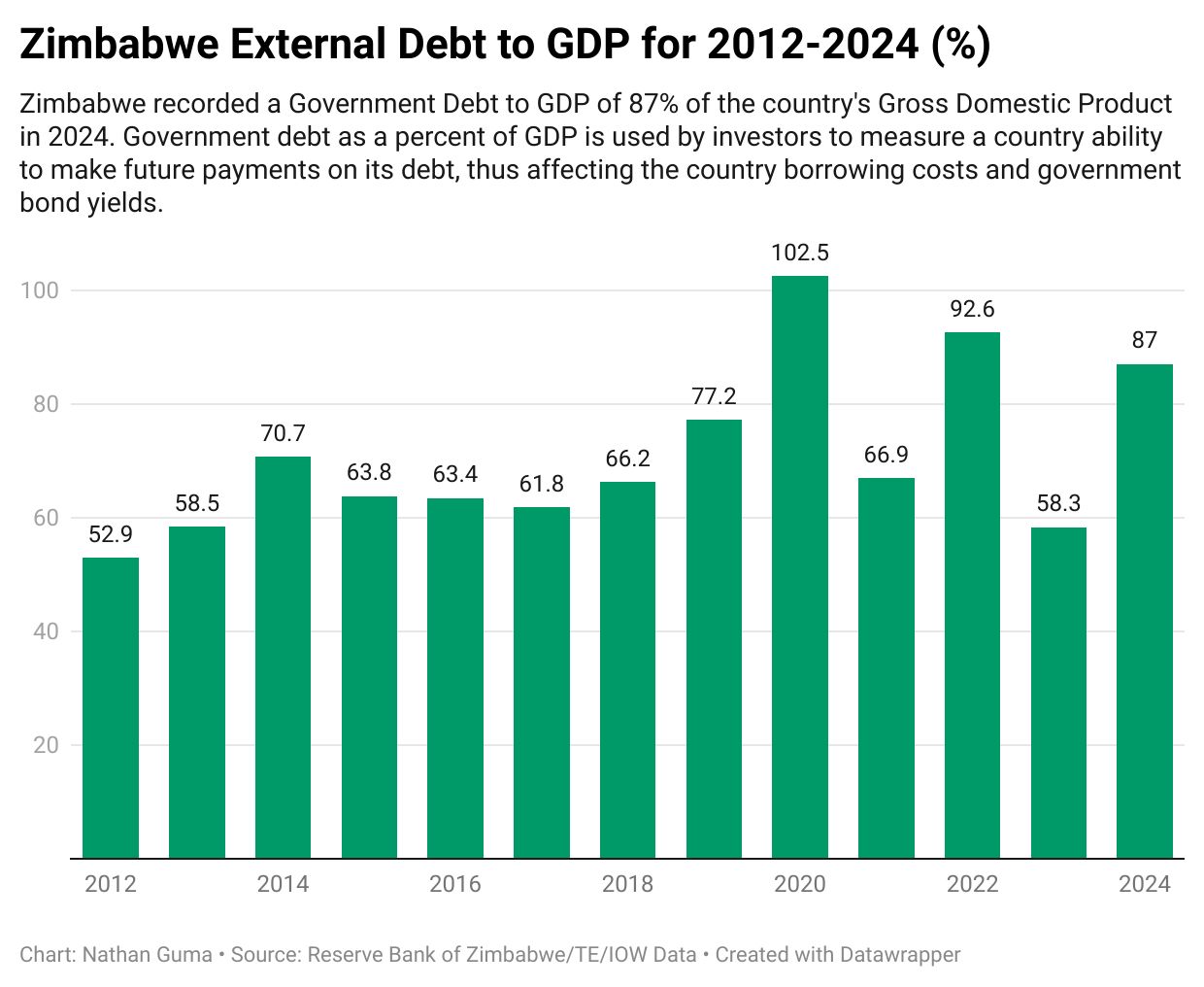
Zimbabwe’s government debt-to-GDP ratio reached 87% in 2024, with external debt posing a major burden. Historically, this ratio has averaged 90.58% of the GDP (1990–2024), peaking at 248.1% in 2005.
Creditors, like the IMF, World Bank and other bilateral partners link debt relief to governance reforms, including civil society engagement.
Therefore, if the PVO Act is seen as repressive, lenders may:
– Demand stricter reforms before approving debt relief.
– Withhold financing, pushing Zimbabwe towards riskier borrowing.
– Delay restructuring, worsening the country’s fiscal crisis.



The law, which regulates NGOs has been facing criticism for restricting civic space.
Its impact is already being felt, with the European Union discontinuing governance funding—the second such move since Zimbabwe’s disputed 2023 elections.
“Zimbabwe has over US$21 billion in debt and arrears. It is disappointing to see the government fail to uphold commitments, particularly on civic space,” said EU Ambassador Jobst von Kirchmann.
“The PVO Act’s enactment, without addressing civil society’s concerns, reinforces negative governance trends. As a result, the EU will discontinue planned 2025 funding for good governance initiatives.”
The Act amendment could have economic implications on debt restructuring.
Zimbabwe’s government debt-to-GDP ratio reached 87% in 2024, with external debt posing a major burden. Historically, this ratio has averaged 90.58% of the GDP (1990–2024), peaking at 248.1% in 2005.
Creditors, like the IMF, World Bank and other bilateral partners link debt relief to governance reforms, including civil society engagement.
Therefore, if the PVO Act is seen as repressive, lenders may:
– Demand stricter reforms before approving debt relief.
– Withhold financing, pushing Zimbabwe towards riskier borrowing.
– Delay restructuring, worsening the country’s fiscal crisis.