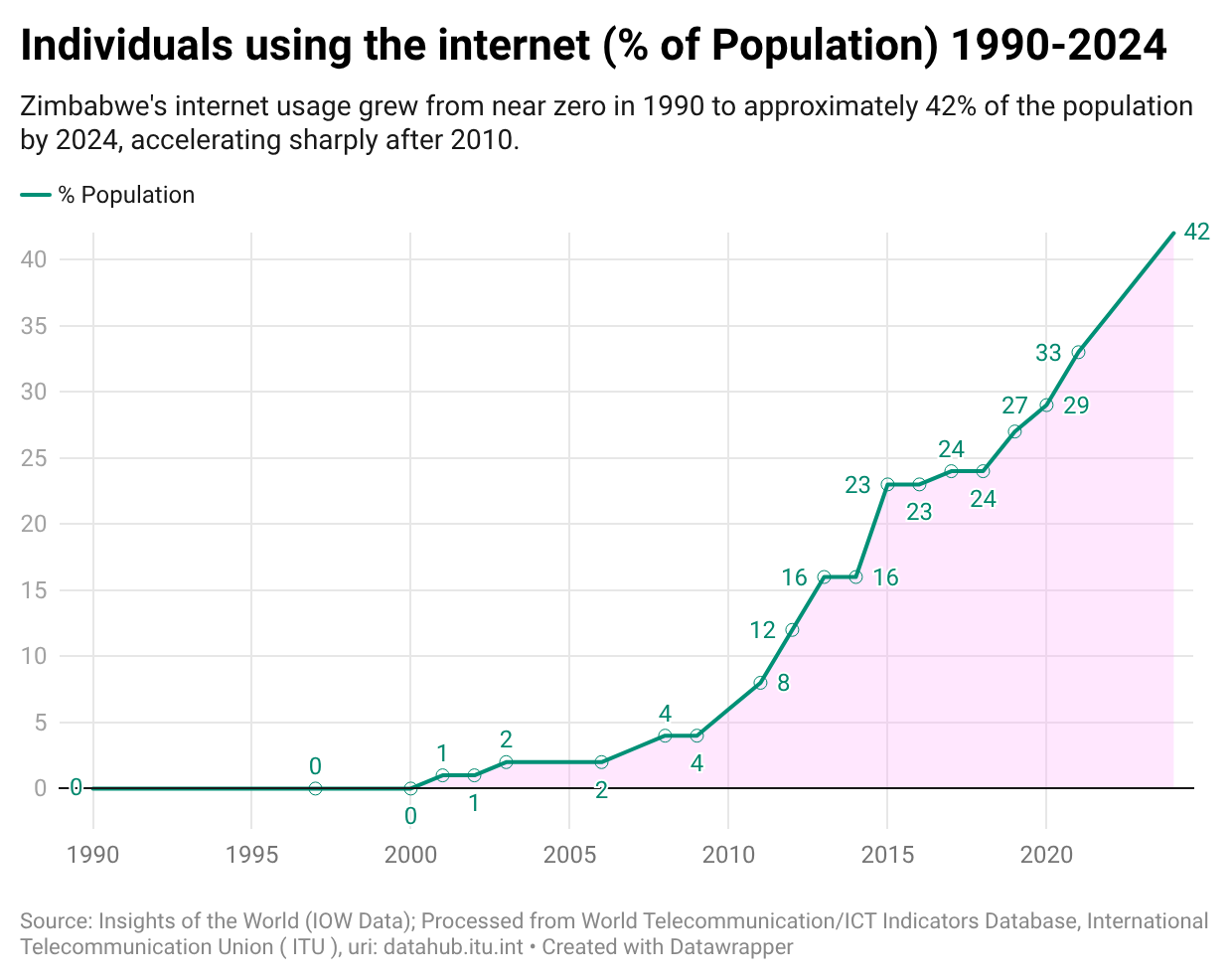
ZIMBABWE’S internet use has grown from almost nothing in the early 1990s to a significant part of daily life today, but the share of the population using the internet remained below 50% in 2024, according to International Telecommunication Union (ITU) data published via the World Bank.
The data shows that in 1990, internet penetration in Zimbabwe was effectively zero.
For more than a decade, usage remained at negligible levels, limited mainly to universities, government offices, and a small group of urban professionals.
Between 1990 and 2004, growth remained flat as access costs were high, infrastructure was limited, and most citizens had no practical way to go online.
The first clear change appears around 2005, as internet use began to rise slowly from under 5%, reaching about 16% by 2011.
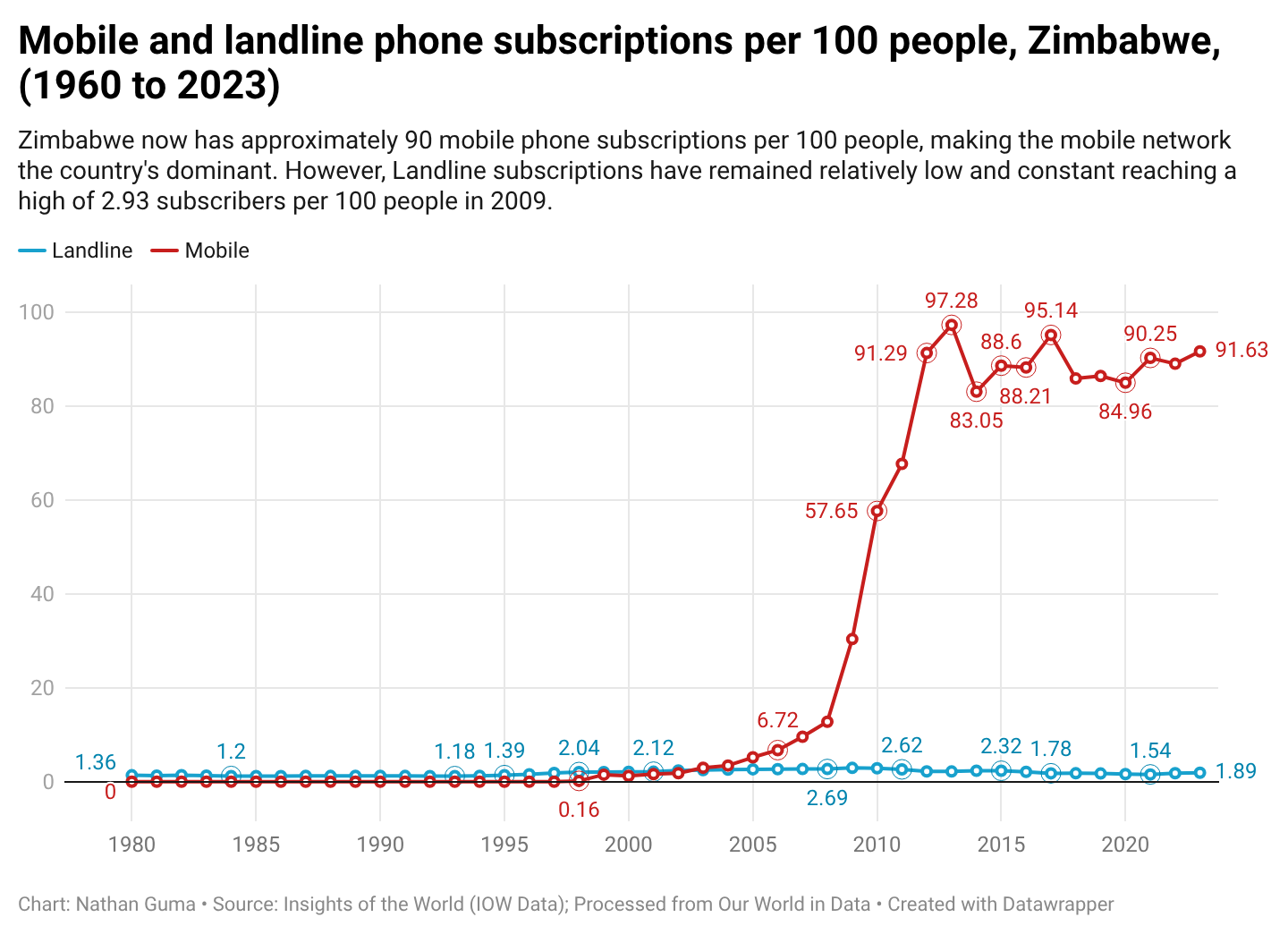
This shift coincided with the expansion of mobile phone networks and the entry of private telecom operators, which made digital access more widely available beyond fixed-line systems.
Mobile phones became the main entry point to the internet, especially as smartphones gradually became more affordable.
From 2013, the trend accelerates sharply. Internet penetration rises from about 20% and continues climbing steadily over the next decade, reaching an estimated 42% of the population by 2024.
The expansion was attributed to lower smartphone prices, reduced data costs relative to income, and the growth of social media platforms such as WhatsApp and Facebook.
The COVID-19 period also increased reliance on digital tools for communication, education, and business.
The data shows a structural shift in how Zimbabweans access information and services, moving from limited connectivity to mass adoption within a single generation.
However, the figures measure access, not conditions, and do not capture affordability, service quality, or restrictions on digital rights.
Internet access in Zimbabwe has also developed alongside regulatory tensions, including periodic shutdowns and debates over state control of telecommunications infrastructure.
The ITU dataset highlights a clear rise in connectivity, but it does not show how that connectivity is governed or monitored within the country’s broader digital environment. – IOW Data.