ZIMBABWE’S automated teller machine (ATM) network has contracted sharply over the past decade, reflecting a structural shift toward digital financial services and away from traditional cash-based banking.
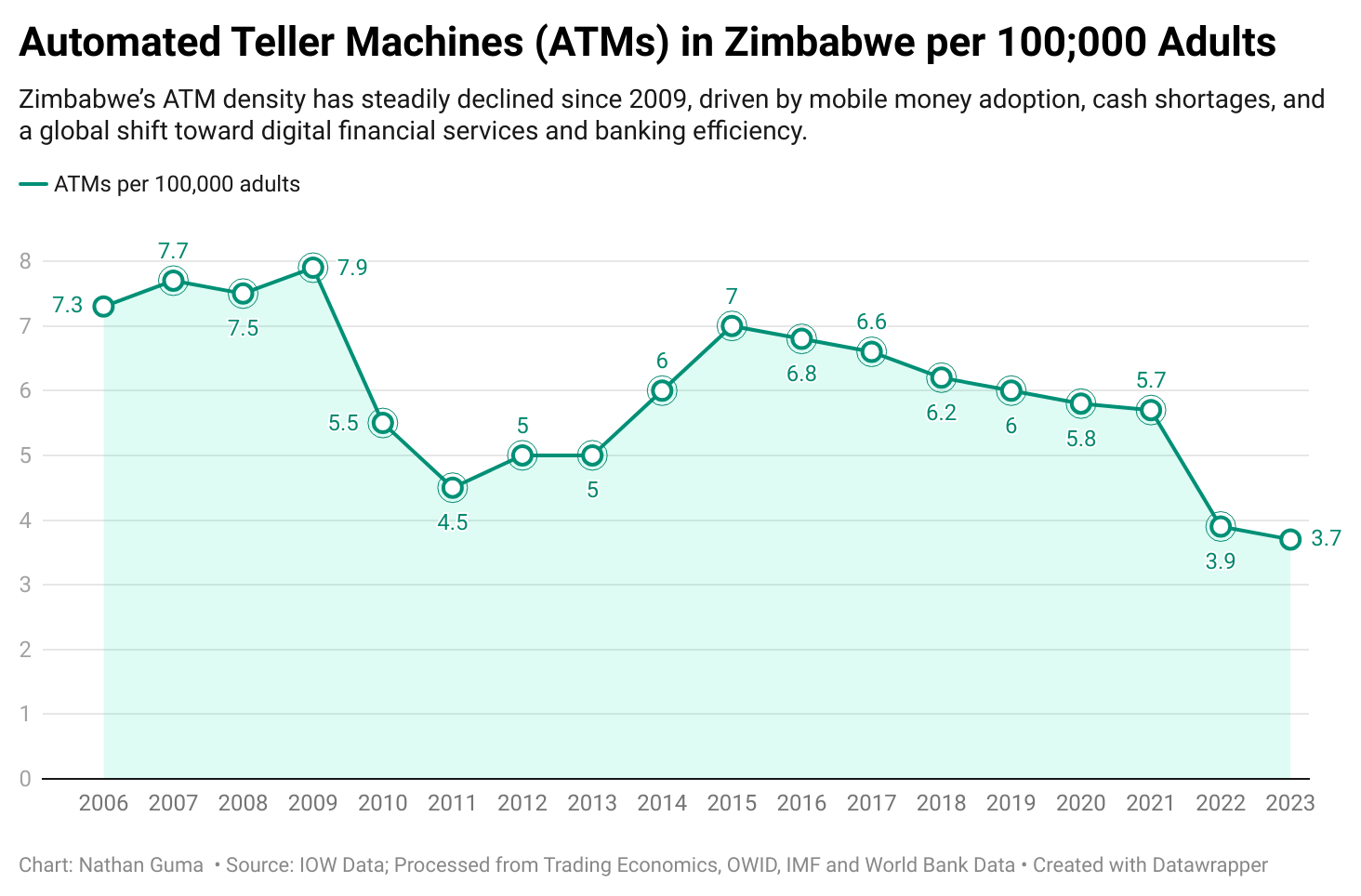
Data trends by the International Monetary Fund (IMF) show that the number of ATMs per 100,000 adults in Zimbabwe dropped from nearly 8 in 2009 to just 3.7 in 2023, with the steepest declines occurring after 2015.
The decline also aligns with a broader reduction in physical banking infrastructure across the global financial sector.
In Zimbabwe, it has however been largely attributed to the rise of mobile money platforms, such as EcoCash, which have expanded rapidly across the country.
These services have been offering financial access to previously underserved populations, particularly in rural areas, and have reduced the reliance on cash and traditional bank branches.
The trend is not unique to Zimbabwe.
Globally, ATM density has been falling since 2018 as financial institutions shift toward digital channels to lower costs and improve operational efficiency.
In Zimbabwe, persistent cash shortages and economic volatility have further accelerated the transition.
The shift in financial services has altered account ownership patterns, with mobile money now the primary access point in many developing economies, including Zimbabwe – reducing reliance on physical banking.
Therefore, the country’s declining ATM footprint also highlights the country’s growing reliance on digital financial infrastructure and reflects a broader realignment underway across global banking systems. – IOW Data.