BY NATHAN GUMA
NEW data has revealed the sorry state of Zimbabwe’s prisons, highlighted by chronic shortages of basic supplies, deteriorating infrastructure, creating a amid indications of underfunding of the Ministry of Justice Legal and Parliamentary Affairs.
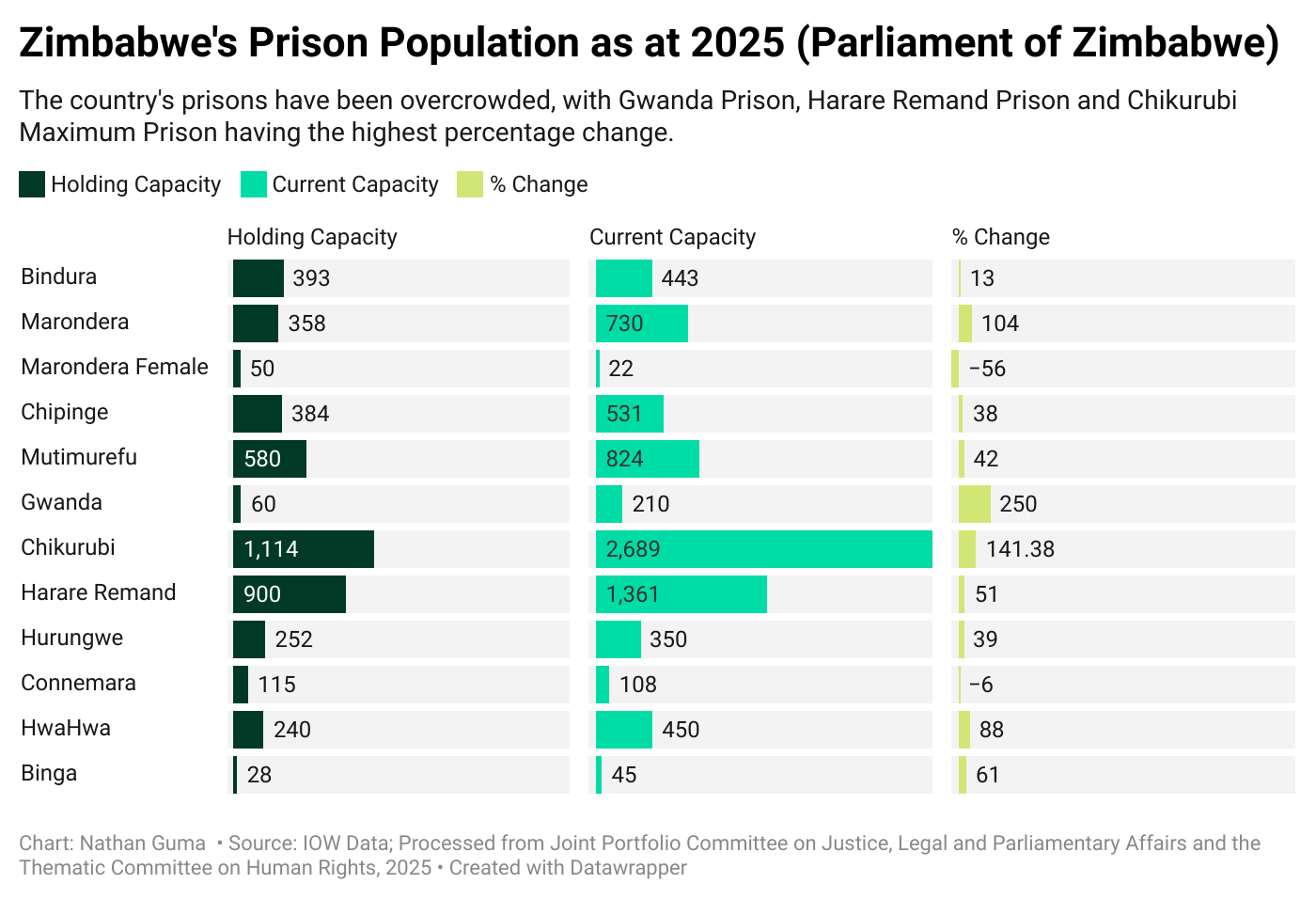
According to a joint report by the Joint Portfolio Committee on Justice, Legal and Parliamentary Affairs and the Thematic Committee on Human Rights, the country’s prisons have been operating between 100% and 200% above capacity.
The report, based on visits to 17 prisons across the country’s ten provinces, paints a bleak picture of life behind bars, marked by overcrowded cells, lack of drugs, collapsing sanitation systems, and outdated facilities, some over a century old.
Findings by the report have shown that at Chikurubi Maximum Security Prison, which holds more than twice its capacity of 1,114 inmates, prisoners sleep on bare floors, share insufficient uniforms, and lack essential items such as soap and toiletries.
Water and electricity are frequently unavailable, and cooking is done over open fires due to a lack of thermal oil and functioning electric pots.
Similarly, Marondera Prison, built in 1910, has a population of 730 against a capacity of 358.
The penitentiary has been highlighted with roof leaks, while cells have been in disrepair, and toilets rely on the outdated bucket system.
Gwanda Prison, originally built for 60 inmates, had 210 inmates during the field visit, an occupancy rate of 350%.
The report says juveniles were being housed with adults, and cases of tuberculosis and skin diseases were on the rise.
According to the report, Harare’s Remand Prison, another ageing facility built in 1910, has been housing over 1,300 inmates against a design capacity of 900.
The report says that water supply has been intermittent, with inmates sometimes going a week without running water, while officers have been facing worsening working conditions and insufficient transport for court transfers.
Health
While the Committee has commended the government for improvement in food and nutrition, there have been serious shortfalls in the health of inmates.
“Generally, inmates were now being served three meals per day, breakfast, lunch, and supper, marking a notable shift from previous years where rations were inconsistent and inadequate,” reads the report.
Healthcare services within the ZPCS have remained severely under-resourced and inadequate, undermining the constitutional right of inmates to basic health and medical care, according to the report.
“Across nearly all facilities visited, the Committee noted a shortage of essential drugs for chronic ailments, a lack of proper functional dispensaries among the prisons, lack of adequate and qualified medical personnel, and poorly equipped clinics, leaving both inmates and officers vulnerable to untreated illnesses,” it reads.
“All prisons, including Harare Remand, Hurungwe, Khami, Marondera, Chikurubi, Chipinge, and Gwanda, reported frequent shortages of medication, especially for chronic conditions such as hypertension, diabetes, and mental health disorders.”
Long Remand Period
Overcrowding has also been attributed to long remand periods and pre-trial detentions, which the Committee says strain resources.
“The palpable anxiety and despair the Committee encountered stand in stark contrast to the foundational principle of innocent until proven guilty,” it reads.
“These visits crystallised how prolonged pre-trial detention not only inflicts severe individual harm but also strains prison resources, fuels overcrowding, and erodes public confidence in the justice system’s fairness and efficiency.”
Way Forward
With prison standards having been deteriorating, the joint committee says it is crucial for the Ministry of Justice to conduct investigations into the inhuman treatment.
“The Ministry of Justice, Legal and Parliamentary Affairs must conduct investigations into the inhuman treatment and report back its findings to the Committee within three months of tabling of this Report,” it reads.
“The Ministry of Justice, Legal and Parliamentary Affairs should enact a law that explicitly gives a timeline of remand periods by August 2026, ensure that Regional Magistrates and High Court Judges frequently visit the prisons for monitoring purposes.” – IOW Data.