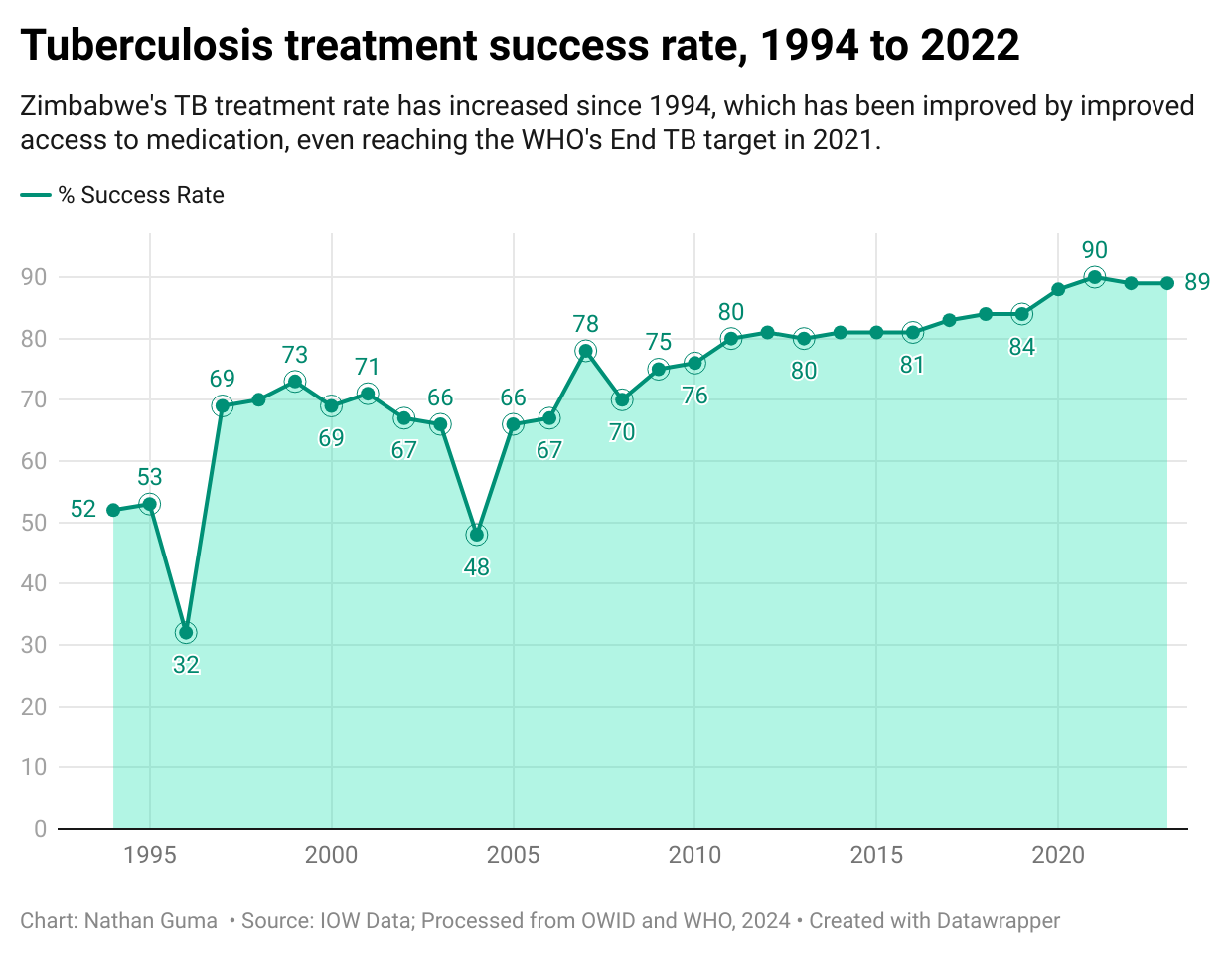
ZIMBABWE has recorded high tuberculosis (TB) treatment success rates over the past three decades, a trend attributed to improved access to medication and reflecting sustained progress in the country’s long-term fight against the infectious disease.
Data from the World Health Organization (WHO) shows a steady increase in TB treatment success between 2008 and 2023.
According to these trends, the country’s treatment success rate for tuberculosis climbed dramatically from approximately 55% in 1994 to meet the 90% target outlined under the End TB Strategy.
The End TB Strategy, launched by the WHO in 2015, aims to significantly reduce the global tuberculosis epidemic by 2035, with the 90% target serving as an indicator of countries’ progress toward this goal.
The treatment success rate measures the percentage of people diagnosed with TB who are either cured or complete their course of treatment according to national guidelines.
Zimbabwe’s fight against TB has long relied on international partnerships, with the Global Fund, USAID, and the Stop TB Partnership among the key contributors supporting national efforts in prevention, treatment, and drug procurement.
For example, USAID has historically provided substantial funding for TB programs in Zimbabwe, including the $25 million Challenge TB grant and the $29 million SUPPORT-TB project.
However, recent funding has faced disruptions, with reports of USAID suspending some aid agreements in early 2025.
Despite this, the U.S. government has continued to provide significant support for TB through other mechanisms, such as contributions to the Global Fund, which in turn funds programs in Zimbabwe.
The Global Fund invests up to US$5 billion a year to defeat HIV, TB and malaria and ensure a healthier, safer, more equitable future for all. IOW Data.