ZIMBABWE’S scholarly works in artificial intelligence (AI) have grown steadily over the past eight years, marking a significant rise in local participation in the global research ecosystem.
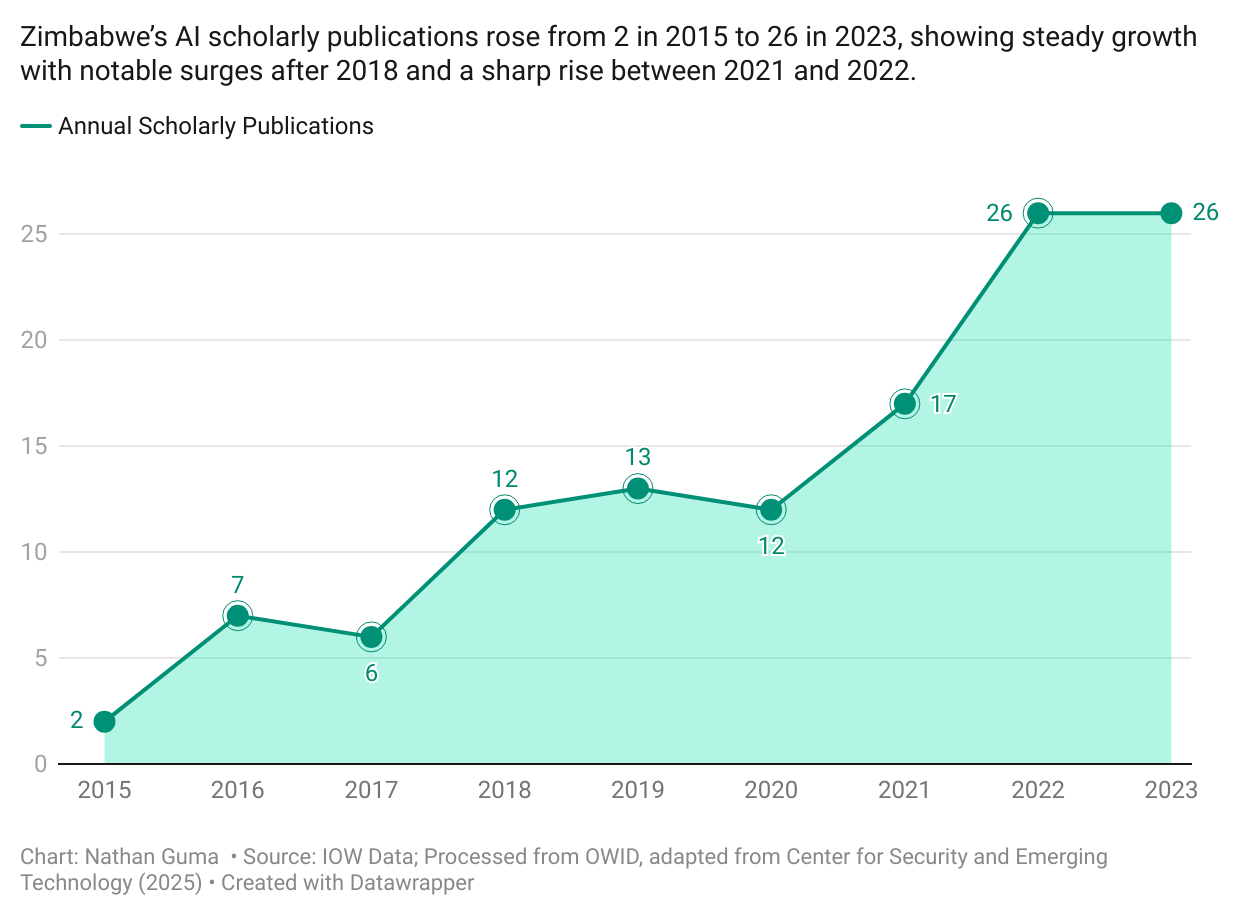
Data compiled by the Center for Security and Emerging Technology (CSET) show that Zimbabwe’s AI-related academic publications increased from just two in 2015 to 26 in 2023.
The data, drawn from the Merged Academic Corpus (MAC), which contains over 260 million academic papers, highlight a consistent upward trend, with notable surges after 2018 and a sharp rise between 2021 and 2022.
CSET classifies AI publications using an automated system that identifies articles linked to artificial intelligence.
Publications are attributed to countries based on the institutional affiliations of authors. Each paper counts once for every country represented, regardless of the number of contributing authors from that nation.
The rise in Zimbabwe’s output mirrors global growth in AI research and signals the country’s increasing integration into international academic collaborations.
Analysts say the trend reflects expanding research capacity and interest in emerging technologies within Zimbabwe’s universities and research institutions.
Continued support for data science education and innovation could strengthen Zimbabwe’s position in Africa’s AI research landscape.
Importance of AI in Zimbabwe’s economy
AI could play a critical role in improving service delivery, modernising agriculture, enhancing healthcare systems, and driving digital governance.
With Zimbabwe seeking to build a knowledge-driven economy, AI offers opportunities to address persistent challenges such as low productivity, inefficiency, and limited access to data-driven decision-making in both the public and private sectors. – IOW Data