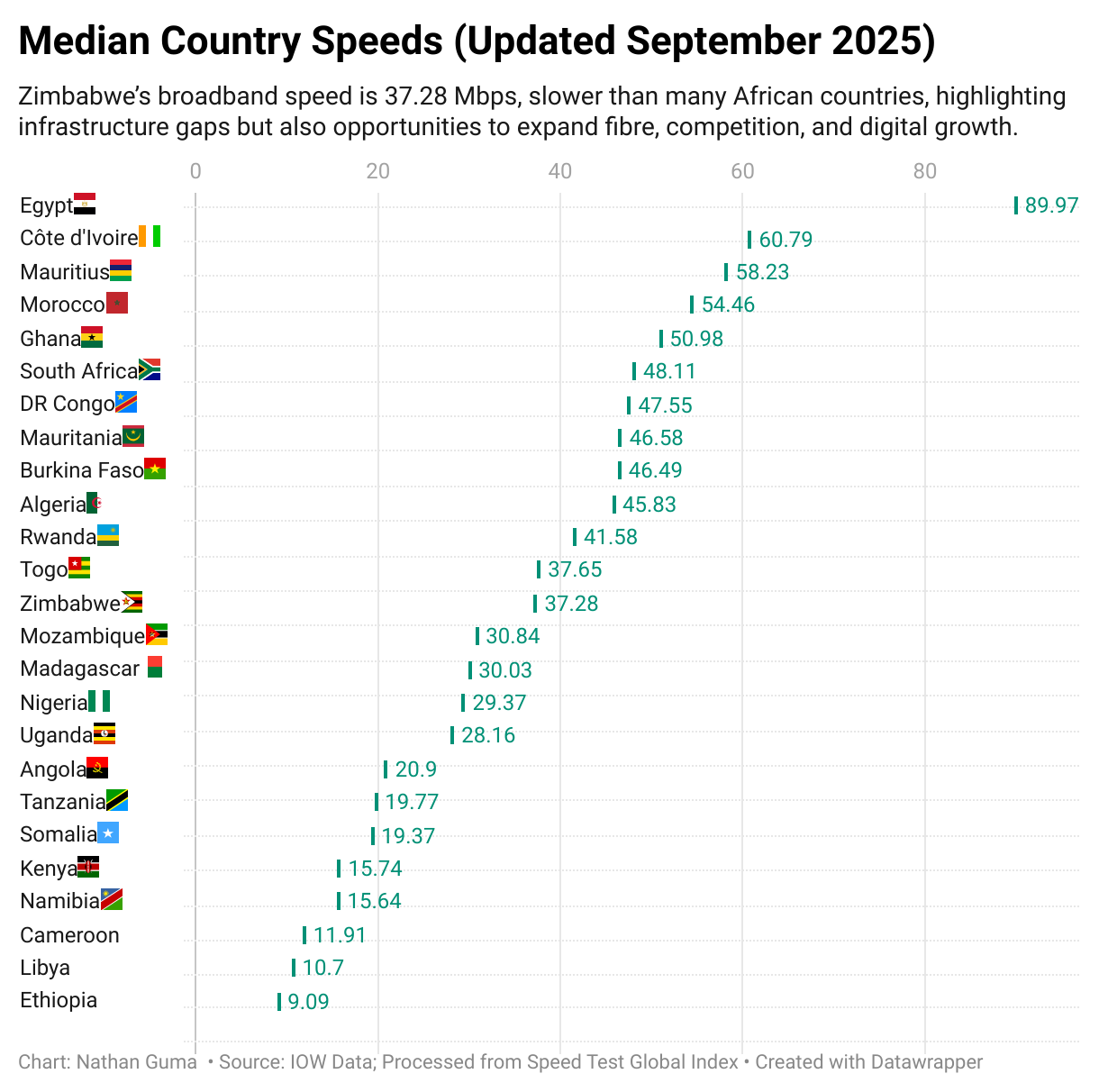
Zimbabwe’s fixed broadband internet speed stands at 37.28 Mbps, placing it behind many African peers, according to the latest Speedtest Global Index.
Fixed broadband median download speed measures how fast typical users can download data over wired internet connections like fibre, ADSL, or cable.
It also indicates typical internet performance, showing how quickly users can download webpages, videos, software updates, cloud files, or stream media in real-world conditions.
While the figure shows progress in connectivity, it also points to the country’s need for deeper investment in broadband infrastructure and network reliability.
Egypt leads the continent with 89.97 Mbps, followed by Côte d’Ivoire (60.79 Mbps) and Mauritius (58.23 Mbps). In southern Africa, Ghana (50.98 Mbps) and Rwanda (41.58 Mbps) have made significant strides through consistent fibre expansion and private sector partnerships, lessons Zimbabwe could draw from.
The current speed affects sectors that rely heavily on data, such as digital media, business process outsourcing, and online education.
However, experts say Zimbabwe has strong potential to close the gap by promoting open competition among internet service providers, expanding fibre-to-home projects, and encouraging local investment in last-mile connectivity.
As digital transformation accelerates across the continent, improving broadband speed will be key to driving innovation, job creation, and access to information.
Zimbabwe’s challenge now is to turn its existing infrastructure base into an engine for faster, more inclusive internet access. –IOW Data.