THE recent killing of a Zimbabwean man, Fungai Nhau, by Chinese national Quijun Yu at a gold mine in Mutoko has reignited public outrage and raised serious concerns about the conduct of Chinese mining companies operating in Zimbabwe.
According to Zimbabwe Republic Police (ZRP) spokesperson Commissioner Paul Nyathi, the fatal shooting occurred around 2 AM on October 9 at a mine in the Makosa area.
The incident took place at China Zhuhe Mining, which later issued a statement claiming the shooting happened during an attempted robbery by “a group of gangsters.” Regardless of the circumstances, the tragedy highlights deeper issues within Zimbabwe’s extractive sector.
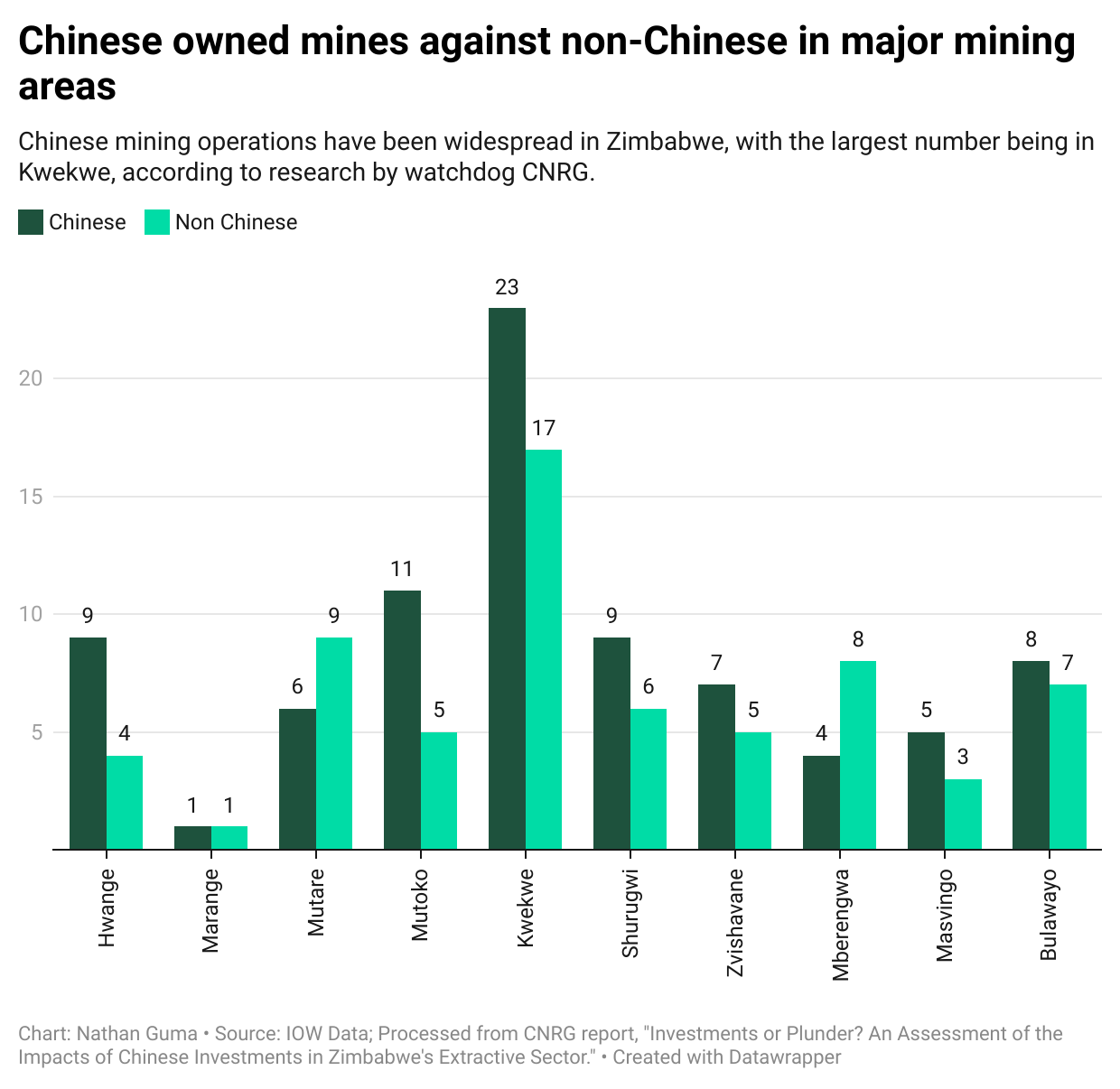
Just five months ago, we published findings from the Center for Natural Resource Governance in a report titled “Investments or Plunder? An Assessment of the Impacts of Chinese Investments in Zimbabwe’s Extractive Sector.” The report raised alarming questions about how Chinese companies are operating, especially in gold-rich regions like Kwekwe and Mutoko.
In Kwekwe—where Chinese firms hold the highest number of mining licenses—workers have reported widespread exploitation: informal employment arrangements, job insecurity, unsafe working conditions, and a complete disregard for occupational health standards. These practices not only violate labor rights but also contribute to growing resentment among local communities.
Policymakers can no longer afford to turn a blind eye. Zimbabwe’s mining laws must be reformed and enforced to require comprehensive Environmental Impact Assessments (EIAs) and Social Impact Assessments (SIAs) before any mining project is approved. Mandatory community consultations must become a legal requirement—not an afterthought.
Furthermore, mining companies must be legally obligated to restore the environment and rehabilitate land after operations cease. Crucially, all investors must respect Zimbabwe’s laws and the sanctity of human life.
Zimbabwe needs investment—but not at any cost. Responsible, rights-based mining should be the standard. Anything less is not development; it’s exploitation. – IOW Data.