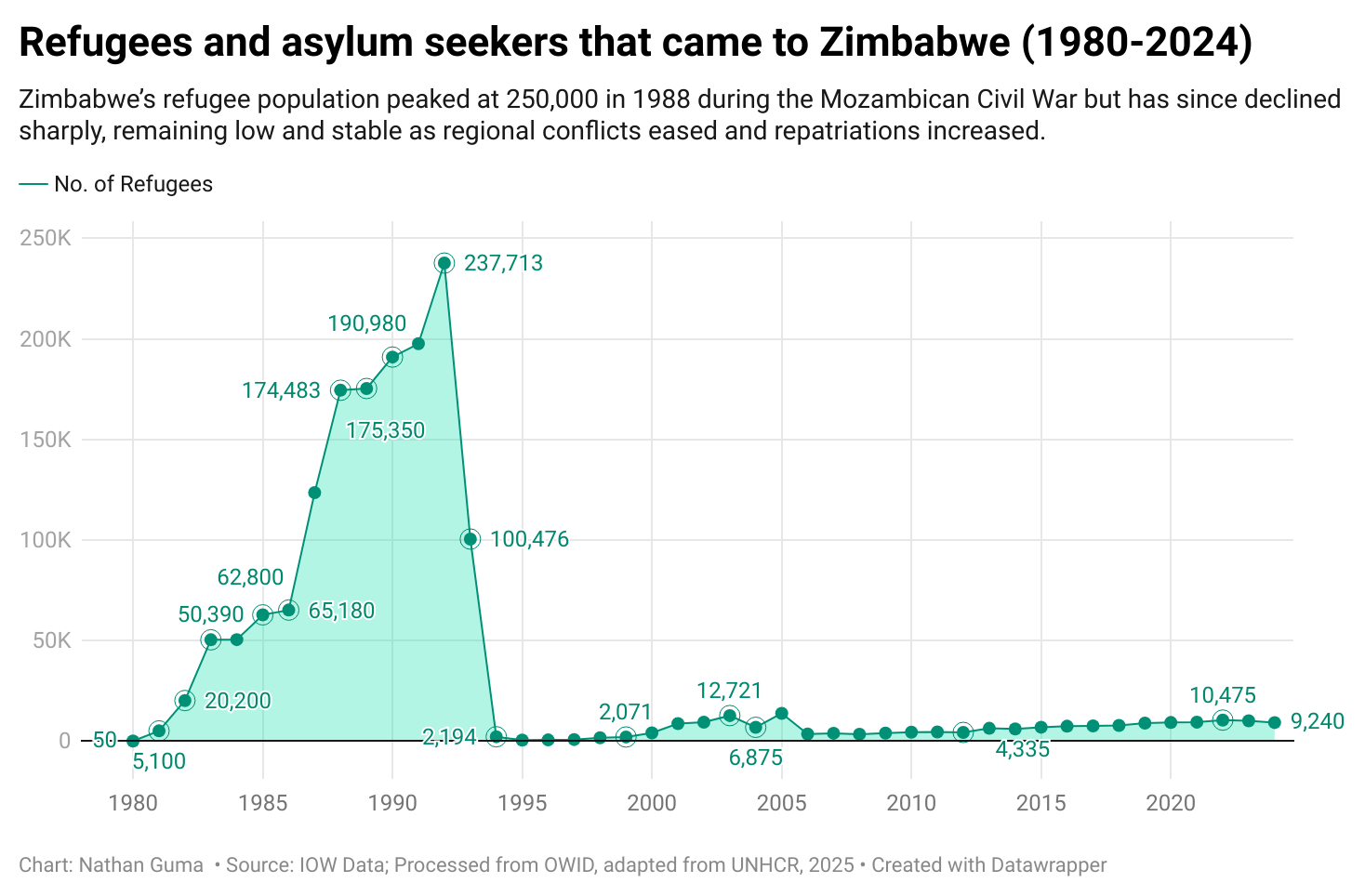
ZIMBABWE’S refugee population has fallen drastically since the late 1980s, when the country hosted one of the largest refugee communities in southern Africa, according to new data from the United Nations High Commissioner for Refugees (UNHCR).
The data shows that Zimbabwe sheltered nearly 250,000 refugees in 1988, a steep rise from just a few thousand at independence in 1980. The spike coincided with the Mozambican Civil War (1977–1992), which displaced millions across the region.
At the height of the conflict, tens of thousands of Mozambicans crossed into Zimbabwe, settling in camps such as Tongogara in Manicaland Province.
However, the number of refugees plummeted sharply after 1990, following peace efforts in Mozambique and subsequent repatriation programmes.
Since the early 2000s, Zimbabwe’s refugee population has remained low and relatively stable, fluctuating between a few thousand and just over ten thousand people.
Most of these arrivals have come from conflict-affected countries including the Democratic Republic of Congo, Rwanda, and Burundi.
The long-term trend reflects broader regional stability, but also highlights Zimbabwe’s continued role as a host nation within southern Africa’s humanitarian framework.
Tongogara Refugee Camp, established in 1984, remains the country’s main settlement for displaced persons.
While refugee numbers are now modest, aid agencies say consistent support and integration programmes remain essential to sustain livelihoods and promote social cohesion among host communities. – IOW Data.